Auschwitz Concentration Camp | Largest extermination camp by Nazi Germany

What was Auschwitz before the concentration camp?
Auschwitz Concentration Camp before
  • Auschwitz, the largest and possibly the most notorious of all the Nazi death camps, opened in the spring of 1940. Located on a former military base outside Oswiecim in southern Poland, it was constructed by appropriating nearby factories and forcibly evicting residents. 
  • It was originally conceived as a detention center for the many Polish citizens arrested after Germany annexed the country in 1939.  They imprisoned teachers, civil servants, artists, priests, politicians, intellectuals, and members of resistance organisations. 
  • Once Hitler’s Final Solution became official, Nazi policy death camps began to be constructed and Auschwitz in Poland became the center of the mass destruction of European Jews. These camps also used to employ slave labour and those unfit for work were immediately exterminated. 
Plan your visit to Auschwitz-Birkenau

Auschwitz today 

Auschwitz Concentration Camp today
  • Auschwitz, today, is open to the public as the Auschwitz-Birkenau Memorial and Museum. It is also the only death camp on the UNESCO World Heritage site. 
  • Auschwitz concentration camps stand as a reminder of the horrors inflicted on millions of people.
  • It sees millions of visitors each year. In 2019, 2 million 320 thousand people from across the globe visited Auschwitz. 
Auschwitz History

Inside Auschwitz-Birkenau

At the peak of its operations, Auschwitz covered about 40 sq km, and had more than 40 camps. In  November 1943, due to the difficulties in managing the growing complex, the Auschwitz Concentration Camps were divided into three. Today, Auschwitz I and Auschwitz II-Birkenau are open to visitors.

Auschwitz I 

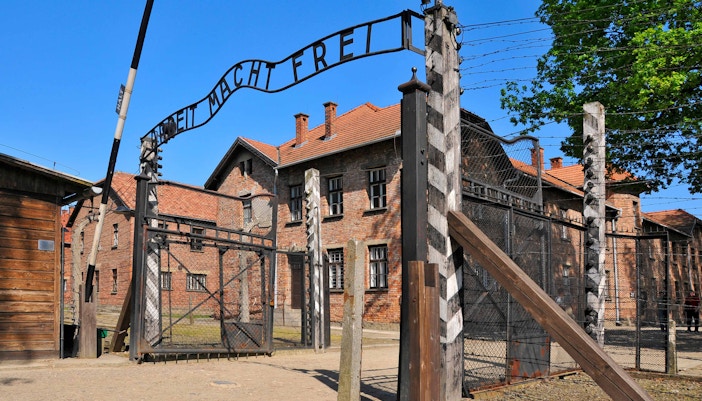
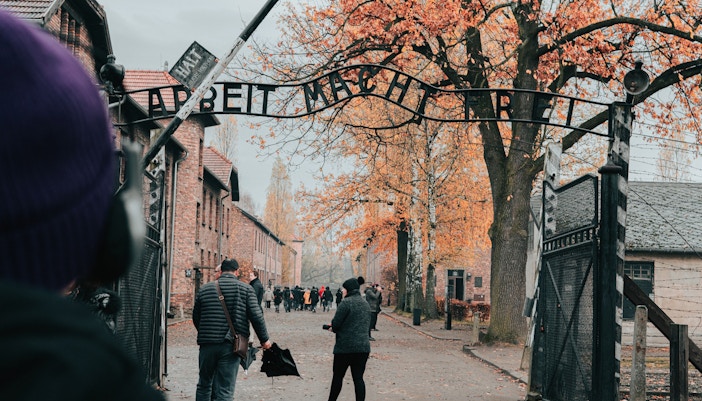
Constructed to incarcerate enemies of the Nazi regime, provide a supply of forced laborers, and serve as a site of extermination, the original camp, Auschwitz I, housed about 16,000 prisoners. Its main gate carries the infamous inscription, “Arbeit Macht Frei”, meaning “Work Makes You Free.”

This was the location of the SS garrison administration. It had a gas chamber, crematorium, and Barrack 10, where SS physicians carried out pseudo-medical experiments. You can still see these structures as part of the Auschwitz Museum.

Auschwitz II-Birkenau

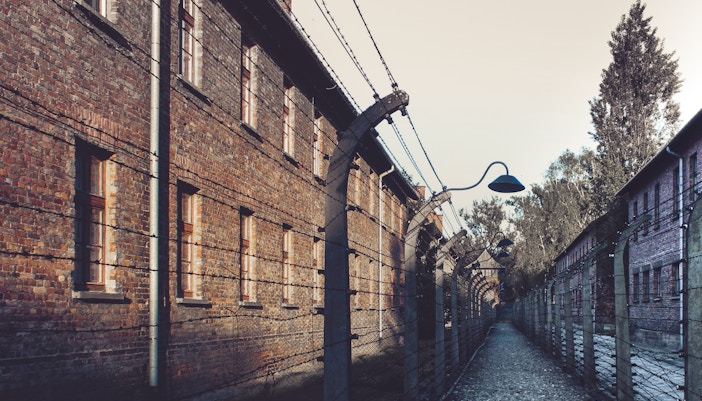
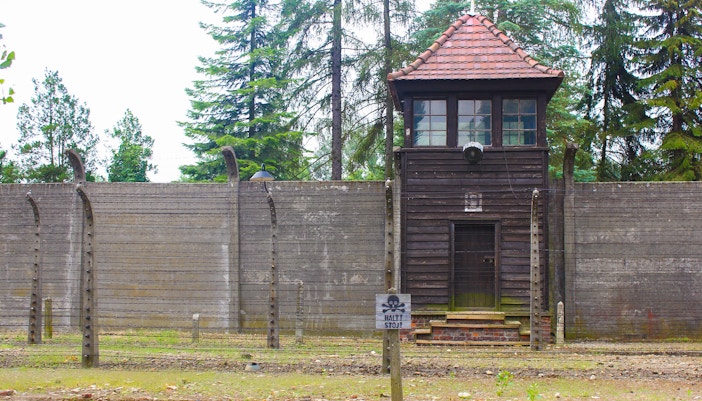
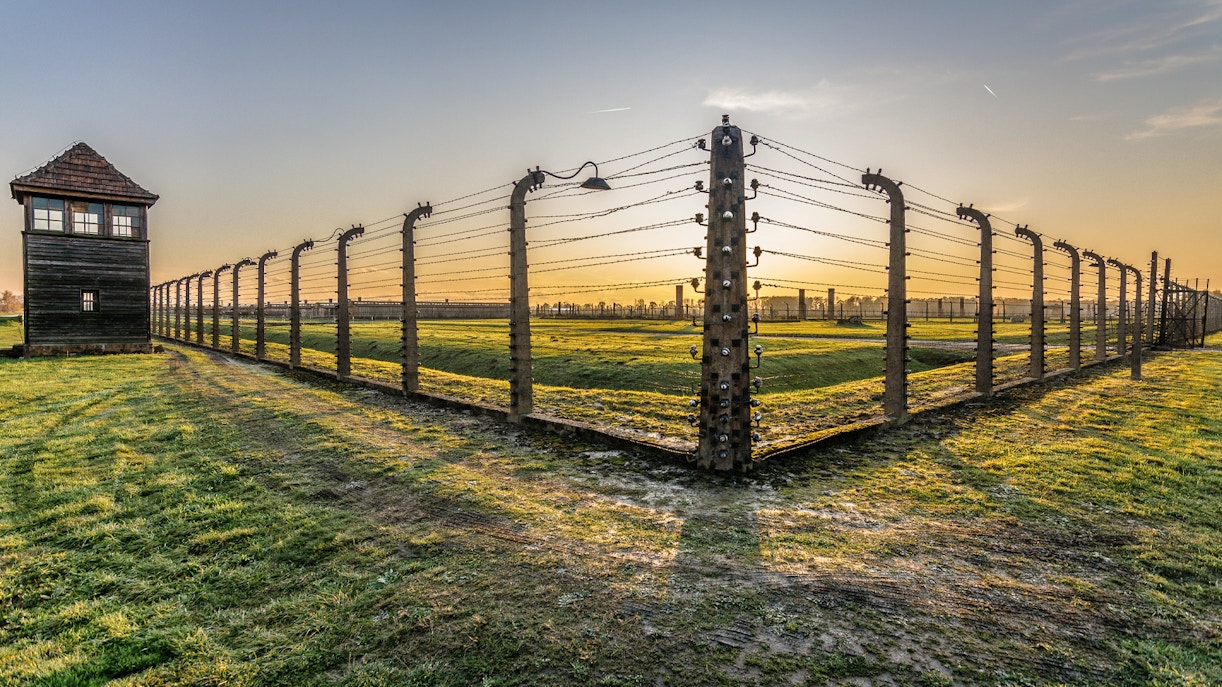
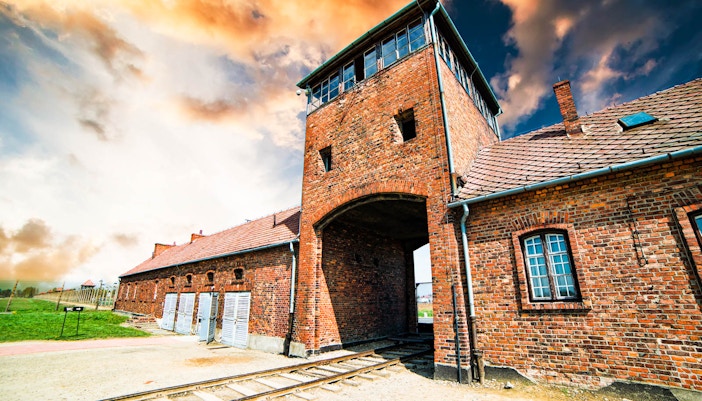
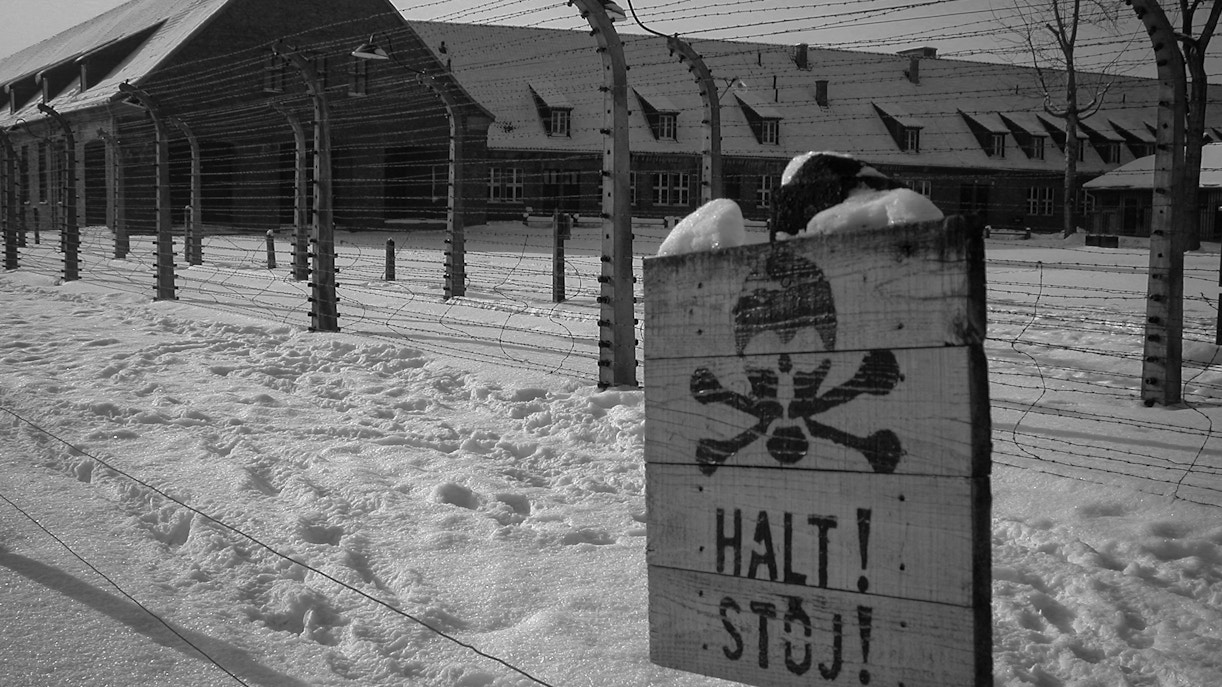
Auschwitz II, or Auschwitz-Birkenau, about 72 km from Krakow, began being constructed in October 1941. Birkenau, the biggest of the Auschwitz facilities, was divided into ten sections, each separated by electrified barbed-wire fences. After its opening in March 1942, it acted as a center for the extermination of Jewish people. It housed a group of gas chambers and crematoriums. More than 40 smaller facilities, called subcamps, served as slave-labor camps. The majority of victims of the Auschwitz Concentration Camp died in Birkenau.

Auschwitz III-Monowitz & Subcamps 

Largest of the subcamps of Auschwitz, Monowitz began operating in 1942. Created as a barrack-camp for slave laborers working in the IG Farben and other factories, Monowitz came to be seen as the headquarters of the industrial sub-camps. Despite better conditions than in Birkenau, the hard labor took a toll on the prisoners. 1,670 prisoners were murdered at the site or died in the sub-camp hospital. 11,000 were sent to Auschwitz and Birkenau, to be killed.  The Monowitz and other subcamps are not open to visitors.

Life and Death in Auschwitz Concentration Camp

Arrival of Jews

  • The prisoners would be separated into two groups: ‘men’ and ‘women and children’. Doctors examined them. Those considered unfit for work, such as pregnant women, were ordered to take showers and led to gas chambers. 
  • Others would be registered and given a prisoner number, which would be tattooed onto their left arm. They would be assigned to a barrack and work detail. They would be told to undress, after which they were forced to have their head shaved, and shower. They would be handed a striped uniform.

Life for the Inmates

  • The day at Auschwitz Concentration Camp began at dawn. The prisoners were woken up at the sound of a gong. A second gong would prompt everyone to rush for roll-call, after which they went for work. Work hours would stretch to 12 hours during summer, and be reduced during winter. Visits to the washrooms were only allowed at designated times. Prisoners returned to the camp before nightfall. 
  • Sunday was not a workday. They spent the day tidying up their barracks, taking weekly showers, and mending or washing their clothes.

Punishments & Execution

  • Attempts to get extra food, shirk work, smoking, relieving oneself outside the designated time, wearing non-regulation clothing, or attempting to commit suicide were all considered offences.
  • Crimes did not always fetch similar punishments. Flogging, confinement in block 11, or assignment to the penal company were the most common types of punishment. The “post”, or hanging torture, was an especially painful punishment, which was usually inflicted for several hours at a time. It would often leave the victim unable to work, and they would be sent to the gas chambers.

Liberation from Auschwitz-Birkenau concentration camps

Auschwitz-Birkenau
  • Auschwitz commandants began destroying evidence of the horrors that took place at the concentration camps towards the end of 1944, with the defeat of Nazi Germany by the Allied forces seeming certain. 
  • In January 1945, the Soviet army entered Krakow. In a final effort to eliminate all evidence, the Germans forced 60,000 detainees, accompanied by Nazi guards, to march to the Polish towns. Countless prisoners died during this process. Those who survived were sent on trains to concentration camps in Germany.
  • The Soviet army entered Auschwitz Concentration Camp on January 27 and found about 7,000 sick or emaciated detainees, mounds of corpses, pieces of clothing, shoes, and seven tons of human hair that had been shaved from detainees before their liquidation. 

Frequently asked questions about Auschwitz concentration camps

Auschwitz concentration camp was the most notorious of all Nazi death camps, and today, it stands as a symbol of the Holocaust.

More Reads

Krakow to Auschwitz Tours

Book Now

Facts About Auschwitz

Book Now

The Auschwitz Museum

Book Now